Vibration Mode Speaker Cleaner: What It Does Differently From a Regular Sound Cycle
Not sure why speaker cleaner tools have a separate “vibration mode”? Here is exactly how it differs from a sound-only cycle, when to use it, and how to combine both for the best results.
Focus keyword: vibration mode speaker cleaner
Secondary keywords: speaker cleaner vibration setting, phone vibration cleaning mode, sound vs vibration speaker cleaner, deep clean speaker vibration, haptic speaker cleaner
Introduction: Two Buttons, One Confusing Choice
If you have used a speaker cleaner tool before, you have probably noticed it is not always just a single play button. Many of the more thorough tools split the process into at least two modes — a sound cycle and a separate vibration mode — and sometimes a third “deep cleaning” option that combines both. It raises a fair question: are they not doing the same thing? Is sound not already a form of vibration?
The short answer is yes, they are related, but not identical, and understanding the difference actually changes how effectively you clean a clogged or wet speaker. This guide breaks down exactly what vibration mode does differently, why it exists as its own separate step rather than being folded into the sound cycle, and how to use both together for the best possible result. There is a demonstration video included as well.
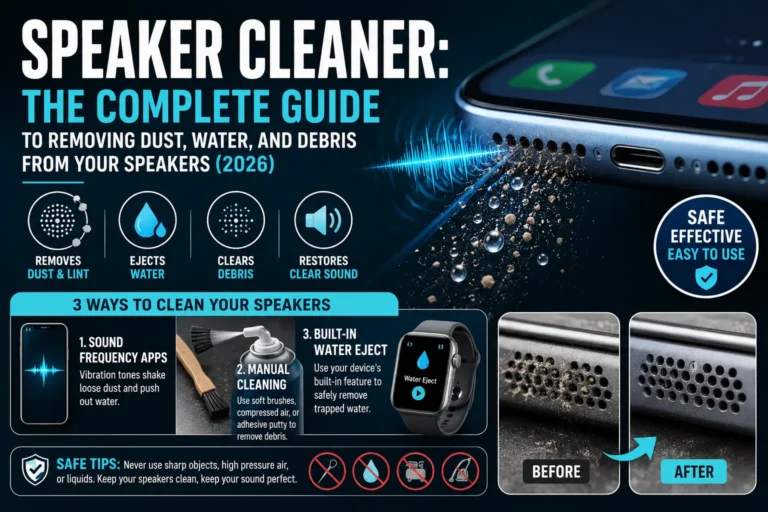
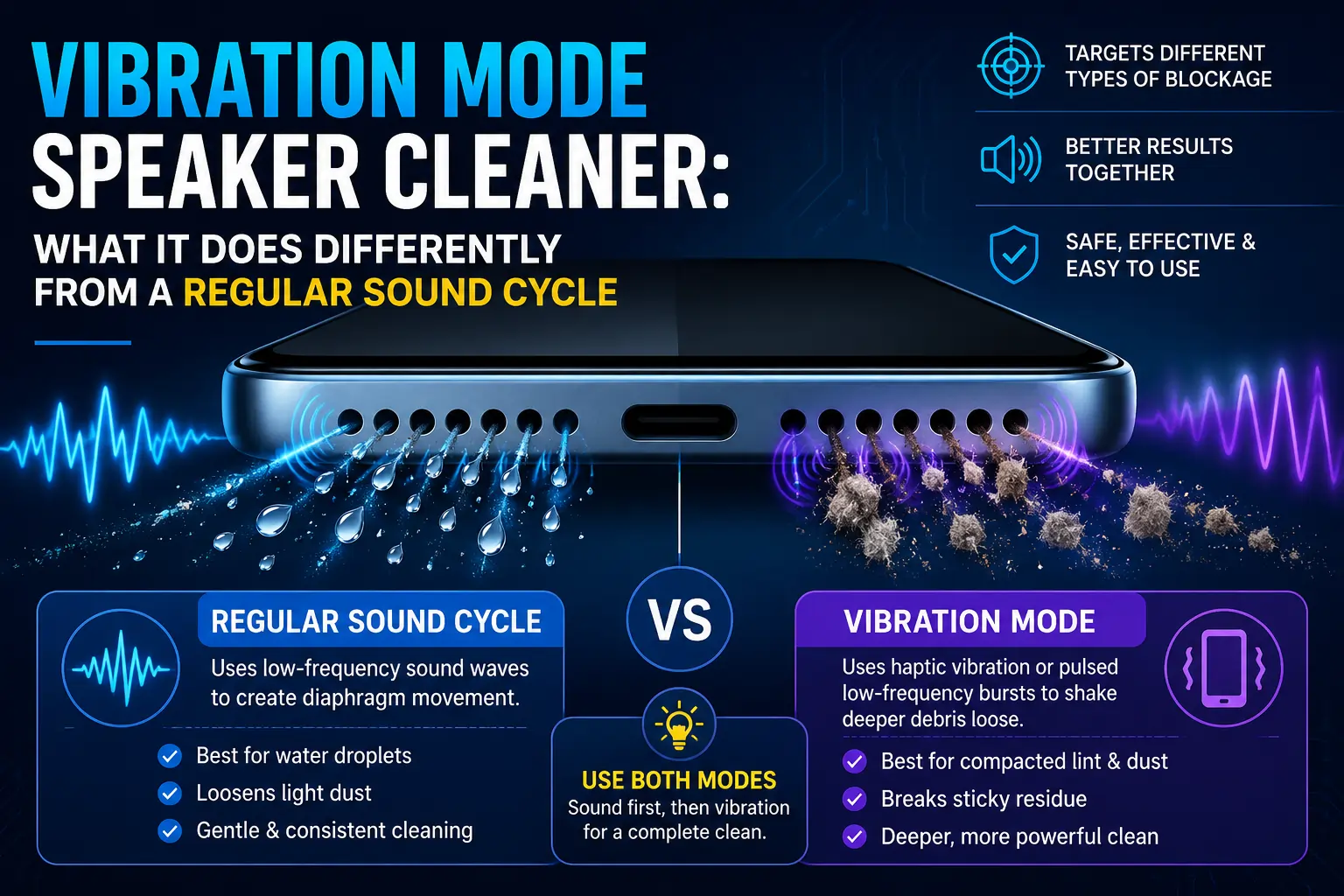
Sound and vibration modes target overlapping but distinct types of speaker blockage.
What “Sound Mode” Actually Does
Before getting into vibration mode, it helps to be clear on what the standard sound cycle is doing. A sound-based cleaning cycle plays a calibrated tone — usually in the low-frequency range, often cited around 165 Hz — directly through your phone’s own speaker. That tone causes the speaker’s diaphragm to move back and forth with enough force to physically disturb trapped water and loosen light dust sitting in the mesh.
This works because the diaphragm’s own natural function — vibrating to produce sound — is being repurposed for a mechanical cleaning task. It is effective, especially for water, because the movement is large and forceful enough to overcome the surface tension holding droplets in place.
What Vibration Mode Adds
Vibration mode takes a different physical approach, and in most modern speaker cleaner tools, it works through one of two mechanisms — sometimes both together:
1. Using the Phone’s Own Vibration Motor
Rather than (or in addition to) the speaker producing an audio tone, vibration mode can engage your phone’s built-in haptic vibration motor — the same one that buzzes for notifications and alerts. This creates a broader, whole-device shake rather than a highly localized diaphragm movement, which helps dislodge debris that has settled slightly deeper in the speaker chamber, not just right at the surface mesh.
2. Low-Frequency Pulsed Tones Optimized for Physical Shake Rather Than Audibility
Some tools implement “vibration mode” as a variation of the sound cycle itself — using a pulsing, rhythmic pattern of low-frequency bursts rather than one sustained tone. This pulsing pattern is designed to create a shaking, jarring motion rather than a smooth, continuous vibration, which can be more effective against compacted or sticky debris than a steady tone.
Either way, the goal is the same: reach material that a smooth, continuous sound wave alone does not fully dislodge.
Compacted or sticky debris often responds better to a jarring, pulsed vibration than a smooth continuous tone.
Why You Would Need Both, Not Just One
It is tempting to assume one mode should simply be “better” than the other, but they are genuinely suited to different kinds of blockage.
Sound Mode Excels At:
- Standing water droplets freshly trapped in the mesh, where surface tension is the main thing holding them in place.
- Light, loose dust that has not had time to compact or stick together.
- Situations where you want a gentler, more controlled cleaning approach, since a smooth tone is a more predictable, consistent force than a jarring pulse.
Vibration Mode Excels At:
- Compacted lint and pocket debris that has packed tightly into the grille over weeks or months, where a smooth tone alone does not provide enough of a jarring disruption to break it loose.
- Sticky residue from things like sugary drinks, sweat, or sunscreen, which tends to resist gentle vibration and responds better to a more forceful, irregular shake.
- Cases where sound mode alone has not fully resolved the muffled sound, since vibration mode is often positioned as the next step up in intensity.
Used together — typically sound mode first, followed by vibration mode — you are addressing both the “fresh, loose” category of blockage and the “stuck, compacted” category in the same overall cleaning session.
Step-by-Step: Using Both Modes Together
Step 1: Prepare the Phone
Remove the case, disconnect Bluetooth devices so audio routes correctly to the built-in speaker, and set your volume to maximum.
Step 2: Run Sound Mode First
Tilt the phone so the speaker faces downward and play the standard low-frequency tone for 30–60 seconds. This handles the easier, more loosely trapped water and dust first.
Step 3: Test Quickly
Play a voice memo or short audio clip to gauge whether sound mode alone made a noticeable difference.
Step 4: Switch to Vibration Mode
If sound is still muffled or crackly, switch to vibration mode and run it for a similar 30–60 second cycle. Keep the speaker facing downward to let gravity assist whatever gets dislodged.
Step 5: Test Again
Check the audio quality once more. If there is improvement but it is not complete, alternate between the two modes for one or two more rounds.
Step 6: Try a Combined or “Deep Cleaning” Mode If Available
Some tools offer a third option that runs sound and vibration together in a single cycle, cycling through different frequencies and pulse patterns. This is generally the most thorough single-session option if the phone is still not sounding right after separate cycles.
Step 7: Know When to Stop
If several rounds of both modes have not produced any real improvement, that is usually a sign the issue is not simple blockage anymore, and continuing to run cycles indefinitely will not help.
Watch a Full Cleaning Session Using Both Modes
Here is a longer demonstration showing sound and vibration-based cleaning used together over an extended session:
📺 Video: 45 Minute Speaker Cleaning & Dust Removal Session
https://www.youtube.com/playlist?list=PLGLZeOFSWnEcwNYQOlxJjDwedyFeqJhZ7<iframe width=”560″ height=”315″ src=”https://www.youtube.com/embed/videoseries?list=PLGLZeOFSWnEcwNYQOlxJjDwedyFeqJhZ7″ title=”Speaker Cleaning and Dust Removal Session” frameborder=”0″ allow=”accelerometer; autoplay; clipboard-write; encrypted-media; gyroscope; picture-in-picture” allowfullscreen></iframe>
Is Vibration Mode Safe to Use as Often as Sound Mode?
Generally yes, with the same reasonable precautions that apply to any sound-based or vibration-based cleaning method:
- Do not run it continuously for extended periods. A handful of 30–60 second cycles with short breaks between them is the typical recommended pattern, rather than one long uninterrupted session.
- Avoid holding the phone tightly in your hand during vibration mode. Your palm can absorb some of the vibration energy meant for the speaker, reducing effectiveness. Resting the phone on a flat, hard surface transmits the vibration more effectively.
- Do not use it while charging. Combining vibration or sound-based cleaning with an active charging connection is not necessary for the cleaning process and is generally best avoided as a simple precaution.
- Give it a rest if you notice any warmth. Speakers and vibration motors used briefly are designed to handle this kind of use, but excessive back-to-back cycling without breaks is not necessary and is not recommended.
When Vibration Mode Alone Is Not Enough
Vibration mode is genuinely more effective than sound mode for compacted or sticky debris, but it still has real limits:
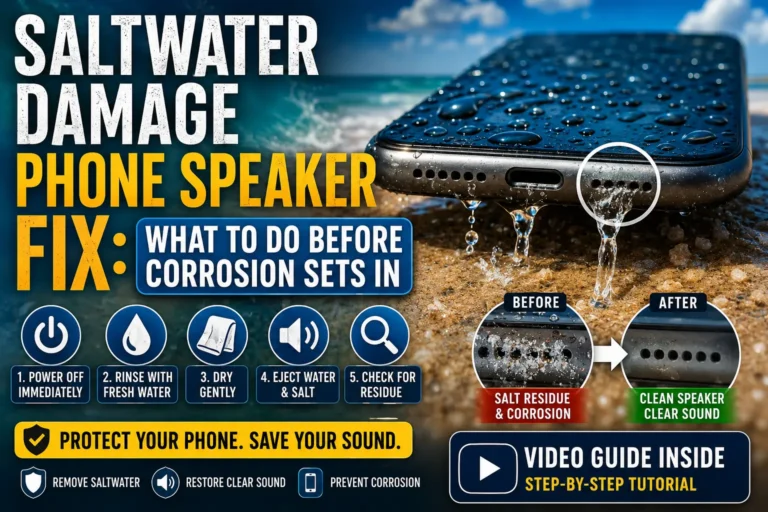
- Hardened, crusty residue — like dried mineral deposits from pool or saltwater — sometimes needs a gentle brush cleaning in addition to vibration, since the residue itself may be more solid than any vibration pattern can break apart.
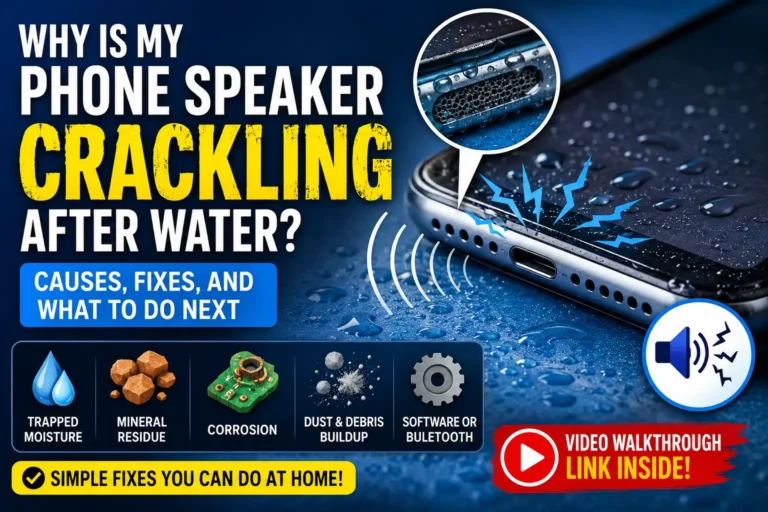
- Deep internal moisture that has traveled beyond the speaker mesh is not something either mode can reach, since both work by disturbing the diaphragm and surrounding chamber rather than accessing the phone’s internals.
- Physical damage to the diaphragm will not respond to any amount of vibration, since the underlying issue is not blockage at all.
If vibration mode combined with sound mode over several cycles does not produce a real improvement, that is a reasonable point to consider a manual brush cleaning or professional inspection instead of continuing indefinitely.
Resting the phone on a hard, flat surface during vibration mode transmits the vibration more effectively than holding it in your hand.
Frequently Asked Questions
Is vibration mode just a stronger version of sound mode?
Not exactly — it is a different type of physical movement rather than simply a louder or more intense version of the same tone. Vibration mode tends to create a broader, more jarring shake, which is why it is more effective against compacted debris than a smooth continuous tone.
Should I always start with vibration mode since it seems more powerful?
Most guidance recommends starting with sound mode first, since it is gentler and handles fresh, loosely trapped water and dust efficiently. Moving to vibration mode as a follow-up step targets whatever the sound cycle did not fully clear.
Can vibration mode damage my phone’s speaker or vibration motor?
Used for short cycles at normal levels, it is designed to be safe for daily or occasional use. As with any repeated mechanical process, avoiding excessive back-to-back use without breaks is a sensible precaution.
Does vibration mode work if my phone is in silent or Do Not Disturb mode?
This depends on the specific tool, since some rely partly on the phone’s haptic vibration motor rather than purely on audio playback. If a cycle does not seem to be running, check that silent mode is not suppressing the relevant playback or vibration function.
Why do some tools call it “deep cleaning” instead of just “vibration mode”?
Different tools use different naming, but “deep cleaning” mode is often a combined cycle that layers sound and vibration together rather than running them as fully separate steps — effectively a more thorough single session.
How many times should I alternate between the two modes?
Two to three rounds of each is a common recommendation, particularly for heavier water exposure or long-accumulated dust. If there is no improvement after that, further cycling usually is not productive.
Final Thoughts
Vibration mode is not just a rebranded version of the same sound-based cleaning cycle — it is a genuinely different physical approach aimed at the kind of stubborn, compacted debris that a smooth tone alone often cannot fully dislodge. Understanding the distinction means you are not just pressing whichever button looks more promising; you are actually applying the right tool to the right type of blockage — sound mode for fresh water and loose dust, vibration mode for the stuck, sticky, or compacted material that tends to linger after everyday use.
Used together, in the right order, the two modes cover a much wider range of speaker problems than either one running alone — which is exactly why the better cleaning tools bother to offer both in the first place.
Tried alternating between sound and vibration mode yourself? Share which combination worked best for your speaker in the comments, and pass this along to anyone still wondering what that second button actually does.