Silica Gel vs Rice for Phone Water Damage: An Honest Comparison
Meta description: Silica gel or rice — which one actually dries a wet phone faster and safer? Here’s a straightforward comparison based on how each one actually works, plus a video breakdown.
Focus keyword: silica gel vs rice for phone water damage Secondary keywords: rice or silica gel phone, silica gel wet phone, does rice work for wet phone, dry phone silica gel packets, best desiccant for phone water damage
Introduction: The Debate That Refuses to Die
Drop a phone in water, and within about thirty seconds of panic, someone nearby will say the same thing they’ve said for over a decade: “put it in rice.” It’s become such automatic advice that plenty of people reach for the rice bag without ever questioning whether it actually works. In recent years, a second option has been getting more attention as the “smarter” alternative — silica gel packets, the little pouches that come tucked inside shoe boxes and electronics packaging.
So which one actually deserves a spot in your emergency phone-drying routine? This guide walks through how each one physically works, compares them side by side on the things that actually matter — speed, safety, and effectiveness — and looks at where both of them fall short compared to more modern approaches. There’s a video included further down that covers the topic well too.

How Each One Actually Works
Rice: A Passive, Mild Desiccant
Uncooked rice is mildly hygroscopic, meaning it naturally absorbs some moisture from the air around it. This property is genuinely useful in certain contexts — it’s a traditional way to keep camera equipment dry in humid, tropical climates, for instance. The idea behind the phone version is simple: bury the phone in a sealed bag of rice, and the rice slowly pulls ambient moisture out of the air surrounding the device.
Silica Gel: A Purpose-Built Desiccant
Silica gel is a synthetic, porous form of silicon dioxide manufactured specifically to absorb and hold moisture extremely efficiently. It’s the same material found in those small paper packets inside new shoes, bags, and electronics — included precisely because manufacturers need something that reliably keeps humidity away from sensitive items during shipping and storage. Unlike rice, silica gel was designed for this exact job.
Head-to-Head: Silica Gel vs Rice
Absorption Strength
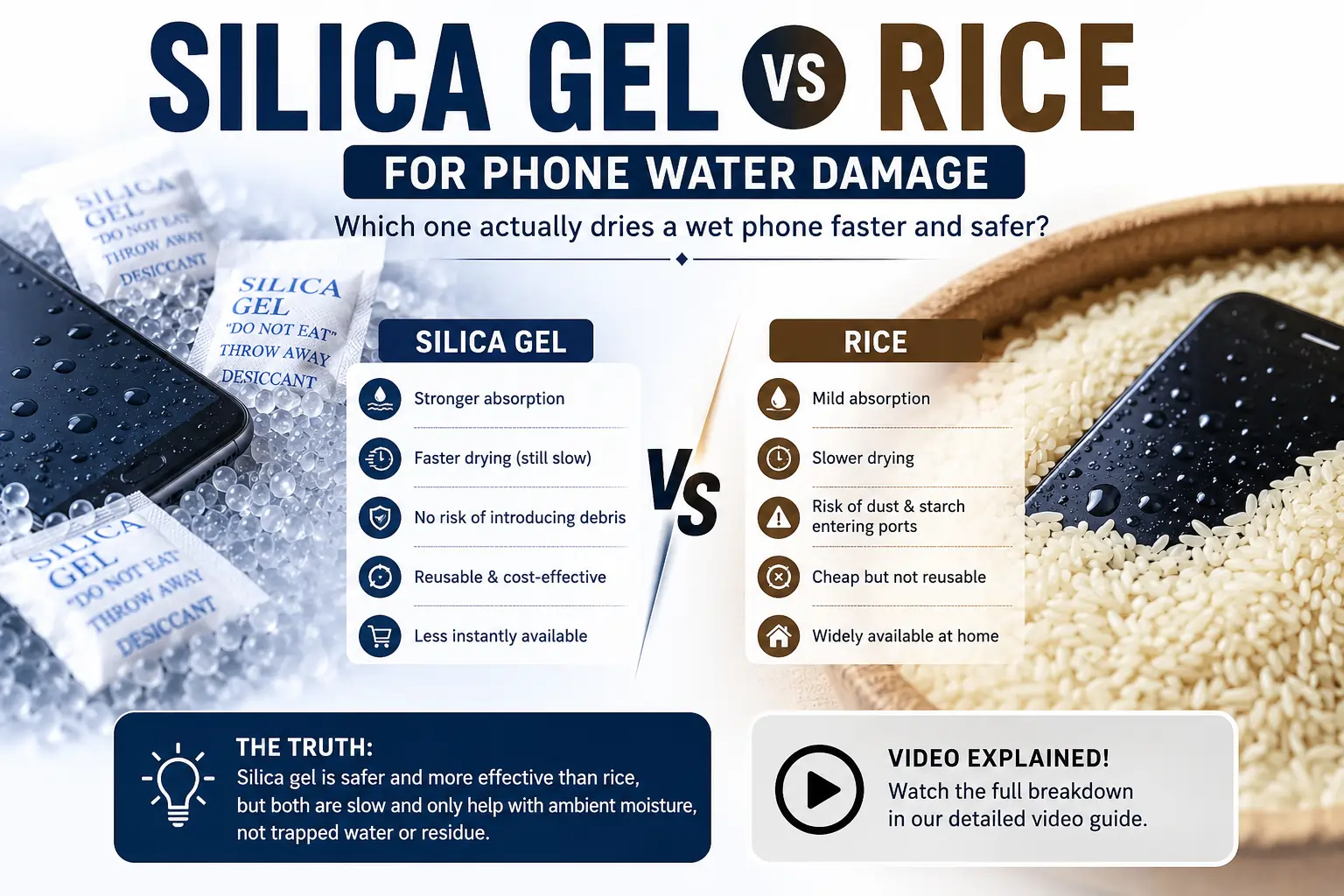
Silica gel is significantly more effective at pulling moisture from the surrounding air than rice is. Rice’s hygroscopic properties are real but mild — it’s a food grain that happens to absorb some moisture, not a material engineered for maximum absorption. Silica gel, gram for gram, draws out meaningfully more moisture in the same amount of time.
Winner: Silica gel
Speed
Neither option is fast in any absolute sense — both work through passive absorption over many hours, not the minutes that active methods like sound-based ejection can achieve. But between the two, silica gel’s stronger absorption typically produces noticeably drier results within the same 24–48 hour window that rice requires, simply because it’s pulling more moisture out per hour.
Winner: Silica gel, though only by degree — both are slow
Risk of Introducing New Debris
This is one of rice’s biggest drawbacks. Uncooked rice grains are covered in fine starch dust, and as a phone sits nestled among them, that dust can work its way into the same charging ports, microphone holes, and speaker grilles you’re trying to protect. Silica gel packets are sealed, so there’s no equivalent risk of loose particles migrating into your phone’s openings.
Winner: Silica gel, clearly
Availability
Here’s where rice has a real practical edge — it’s sitting in almost every kitchen pantry, ready to use the moment you need it. Silica gel packets require either saving ones from previous packaging or buying a dedicated bag, which most people don’t have on hand at the exact moment their phone hits water.
Winner: Rice, for pure convenience
Reusability and Cost
Silica gel packets can often be dried out and reused multiple times (typically in a low oven, well under boiling temperature, to reactivate their absorbency), making them a better long-term investment if you keep some on hand for future incidents. Rice is cheap but gets discarded (or at least shouldn’t be cooked and eaten) after use.
Winner: Silica gel, for anyone planning ahead

Why Both Still Fall Short of an Ideal Solution
Even acknowledging that silica gel outperforms rice on nearly every practical measure, it’s worth being honest that neither one is actually a great solution for the specific problem of a muffled or crackling speaker after water exposure.
They Only Address Ambient Humidity, Not Trapped Water
Both rice and silica gel work by pulling moisture out of the air surrounding your phone. Neither one does anything to physically dislodge a droplet of water sitting deep inside the tiny openings of a speaker grille. If water is trapped there, it may eventually evaporate on its own over the 24–48 hour window either method requires — but the desiccant itself isn’t actively removing it from that specific location; it’s just slightly speeding up the general drying of the surrounding air, which indirectly helps.
They Do Nothing for Residue
If the water involved anything beyond plain tap water — sweat, pool chlorine, ocean salt, or a sugary drink — both rice and silica gel are powerless against the residue left behind once the liquid itself evaporates. Mineral deposits and sticky residue can continue affecting sound quality long after a phone technically “feels dry.”
The Waiting Period Itself Carries Risk
Corrosion on internal metal contacts doesn’t pause just because your phone is sitting in a bag of desiccant. Especially with saltwater or heavily mineralized water, the 24–48 hour window recommended for both methods gives corrosion a real head start before you even know whether the drying worked.
What Works Faster Than Either Method
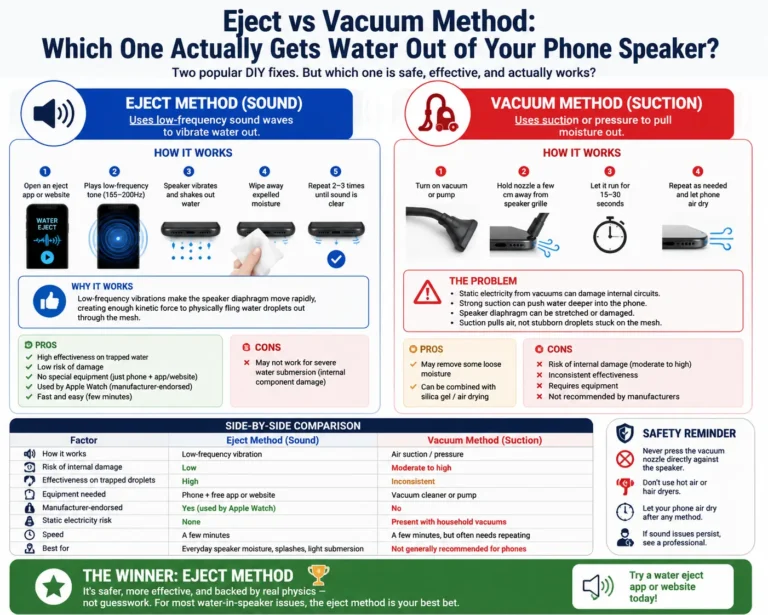
For the specific problem of a muffled or crackling speaker after water exposure, a low-frequency sound-based ejection method has become the more effective modern approach, and it’s worth understanding why it outperforms both desiccants for this particular use case.
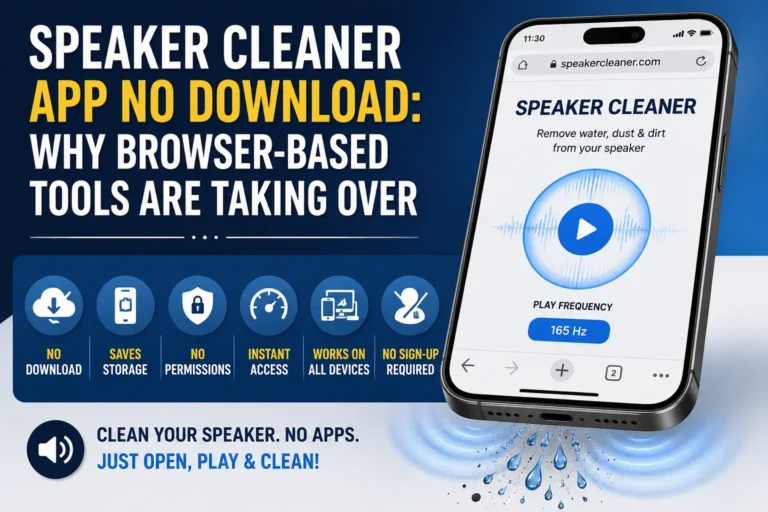
Rather than waiting for ambient humidity to slowly reduce over many hours, a calibrated tone — commonly cited around 165 Hz — physically vibrates the speaker diaphragm with enough force to push trapped water droplets out through the mesh directly, often producing noticeable results within 30–60 seconds per cycle. It’s the same underlying principle used in the water-eject feature built into water-resistant smartwatches.
This doesn’t mean silica gel becomes useless — it’s still a reasonable step for drying the phone’s exterior and general internal humidity as a follow-up measure. But for the specific speaker-related symptom most people are actually trying to fix, sound-based ejection addresses the root cause directly rather than passively waiting for the surrounding air to help.
Watch: Why Neither Rice Nor Silica Gel Alone Is the Full Answer
Here’s a video that walks through exactly why burying a wet phone in rice or silica gel isn’t the complete solution people often assume it is:
📺 Video: Why You Should Never Put a Water Damaged Phone in Rice or Silica Gel https://www.youtube.com/watch/QUPrGbdPetI <iframe width=”560″ height=”315″ src=”https://www.youtube.com/embed/QUPrGbdPetI” title=”Why you should never put a water damaged phone in rice or silica gel” frameborder=”0″ allow=”accelerometer; autoplay; clipboard-write; encrypted-media; gyroscope; picture-in-picture” allowfullscreen></iframe>
A More Effective Combined Approach
Rather than treating this as an either/or choice, here’s a sequence that uses each method for what it’s actually good at.
Step 1: Power Off and Dry the Exterior Immediately
Turn the phone off right away if it’s still wet, and pat down the outside with a soft cloth.
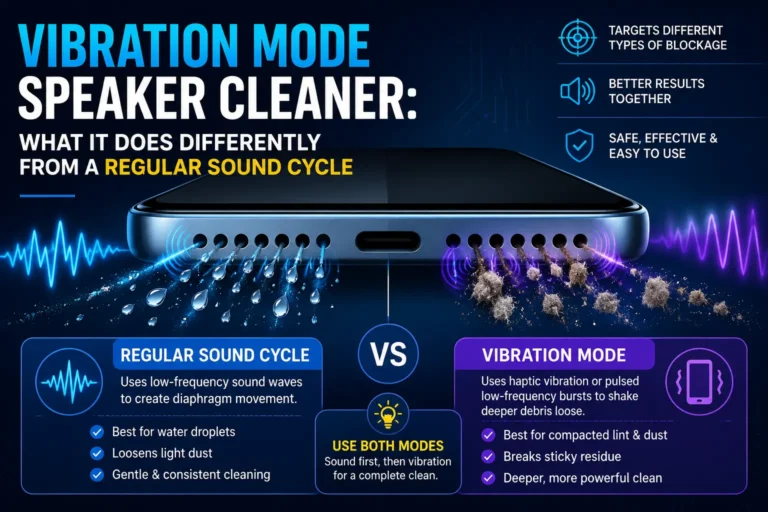
Step 2: Run a Low-Frequency Sound Cycle First
Once the phone is safely powered back on and mostly dry externally, use a sound-based water ejection tool. Set the volume to maximum, tilt the speaker downward, and run the tone for 30–60 seconds, repeating two or three times as needed. This directly targets any water still sitting in the speaker mesh.
Step 3: Use Silica Gel for Residual Ambient Drying
After the active ejection step, placing the phone in a sealed container with silica gel packets for a few hours can help address any lingering internal humidity that the sound method didn’t directly reach — particularly useful if the phone experienced more than a light splash.
Step 4: Skip Rice Entirely
Given that silica gel outperforms rice on effectiveness, debris risk, and reusability, there’s little practical reason to reach for rice at all if silica gel is available.
Step 5: Test With Real Audio Throughout
Check sound quality with a voice memo or short call after each stage, so you can judge whether further steps are actually needed.

When Neither Method Is Enough
Regardless of which drying approach you use, a few signs suggest the situation has moved beyond simple moisture:
- Sound doesn’t improve at all after 24–48 hours of drying combined with sound-based cleaning cycles.
- Sound improves, then gets worse again a day or two later — a pattern more consistent with corrosion than lingering moisture.
- Visible crusty or discolored residue on the speaker grille or nearby contacts that doesn’t clear with a gentle brush.
- Other symptoms appear, such as charging issues, unusual warmth, or erratic behavior.
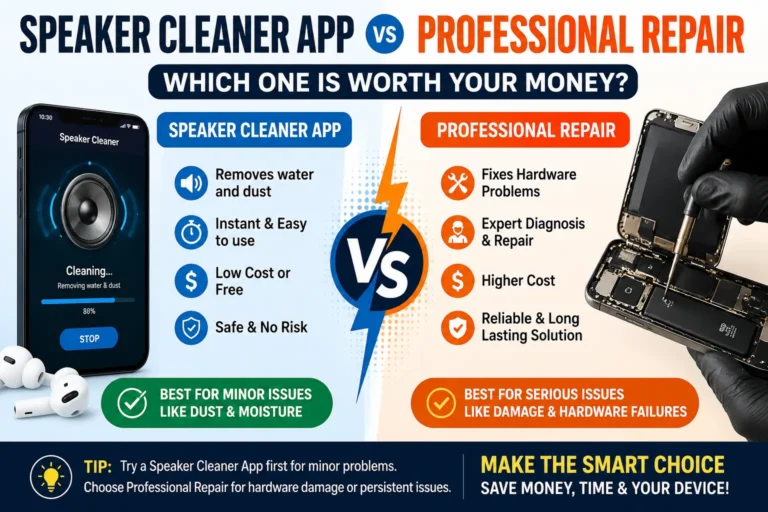
At that point, a professional inspection — which can involve proper internal cleaning with isopropyl alcohol and a check for corrosion on the circuit board — is a more reliable next step than continuing to experiment with any desiccant.
Frequently Asked Questions
Is silica gel actually better than rice, or is that just marketing? It’s a genuine, measurable difference. Silica gel is manufactured specifically for moisture absorption and works meaningfully more efficiently than rice, which only has mild, incidental hygroscopic properties.
Why does Apple specifically warn against rice? Apple’s official guidance flags the risk of small rice particles working their way into ports, microphones, and speaker openings, potentially causing damage beyond the original water exposure. Their recommendation instead points toward airflow-based drying rather than any grain-based desiccant.
Can I reuse silica gel packets from shoe boxes for this purpose? Yes, as long as they’re still dry and haven’t already absorbed moisture from prior use. Reactivating them briefly in a low oven (well below boiling temperature) can restore some absorbency if they’ve gone stale.
How long should I leave my phone in silica gel? Most guidance suggests 24–48 hours for meaningful results, though this addresses general ambient humidity rather than actively removing trapped water from the speaker itself.
Should I use silica gel and a sound-based cleaner together, or just pick one? Using both in sequence — sound-based ejection first to directly clear the speaker, followed by silica gel for broader residual drying — tends to produce better results than relying on either method alone.
Is there any situation where rice is actually the right choice? Really only when silica gel genuinely isn’t available and doing nothing isn’t an option — rice’s mild absorption is still marginally better than leaving a phone in open air with no desiccant at all, even though it comes with the added debris risk.
Final Thoughts
Between the two, silica gel is the clear winner over rice on almost every measure that matters — stronger absorption, no risk of introducing starchy debris into your phone’s openings, and the ability to reuse packets for next time. But the more important takeaway is that neither one is actually the fastest or most direct way to deal with a muffled speaker specifically. Both are passive methods addressing ambient humidity over many hours, while the water sitting in your speaker’s mesh needs something more active to shift it quickly.
If you’re choosing between the two, pick silica gel every time. But if the actual goal is clear sound again as fast as possible, pair it with a proper low-frequency sound ejection cycle rather than treating either desiccant as the whole solution.
Have a preference between silica gel and rice, or found a combination that worked well for you? Share your experience in the comments, and pass this along to the next person about to reach for the rice bag out of habit.