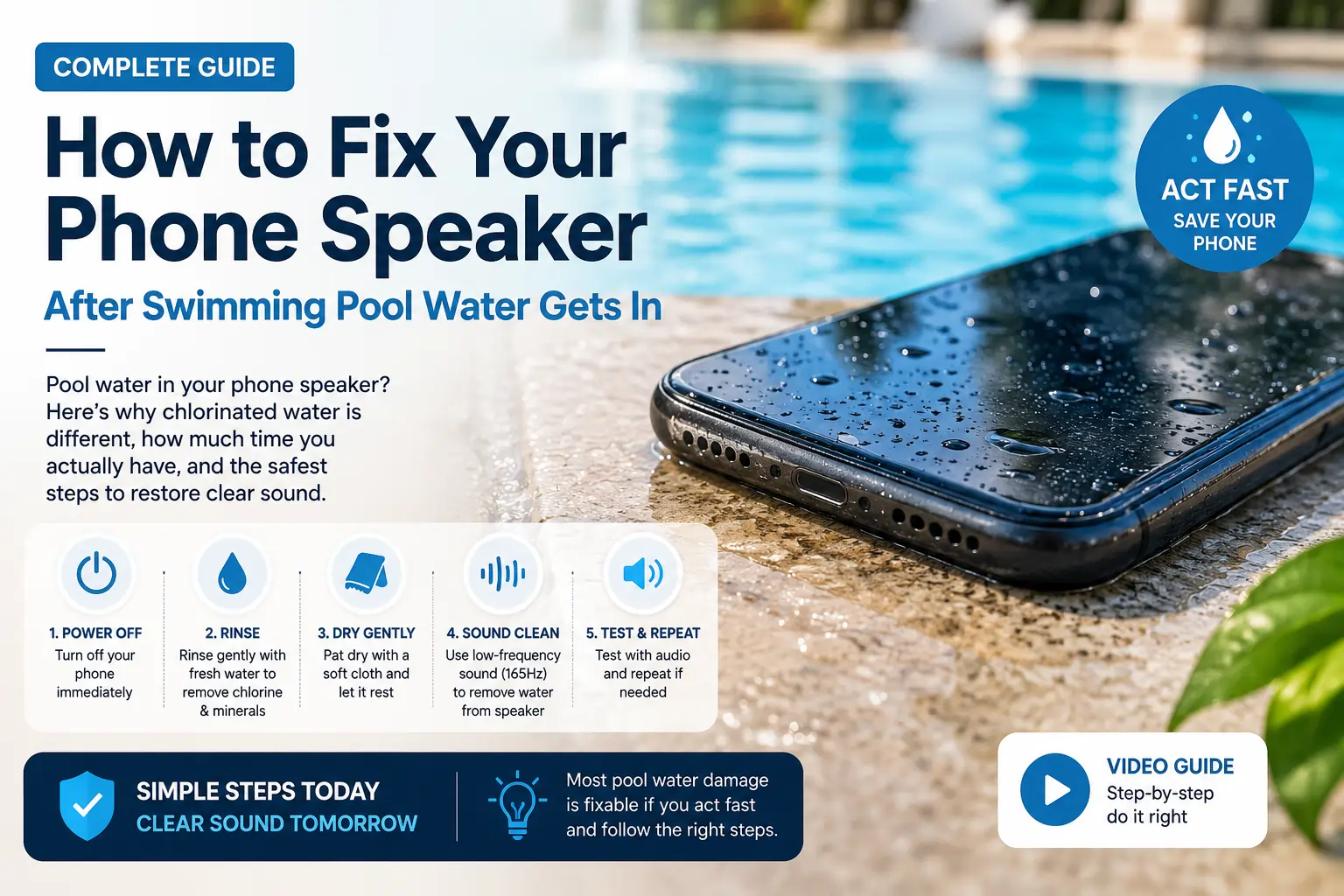
How to Fix Your Phone Speaker After Swimming Pool Water Gets In
Pool water in your phone speaker? Here is why chlorinated water is different from a regular splash, how much time you actually have, and the safest steps to restore clear sound with a video guide.
That Sinking Feeling by the Pool
There is a very particular kind of dread that comes with watching your phone slip out of a pocket or off a lounge chair and into pool water. It is not quite the same panic as a sink splash or a rain shower — pool water carries an extra layer of worry, because most people have heard, correctly, that chlorinated water behaves differently inside electronics than plain tap water does.
The good news: in most cases, a phone that takes a quick dip in a pool and comes right back out can still be saved, and the muffled or crackly speaker sound that follows is very often fixable without any professional repair. The catch is that pool water does need to be treated a little differently than an everyday splash, and the timeline matters more than people realize. This guide walks through exactly why pool water is a special case, what to do in the first few minutes, and how to actually restore clear sound once the immediate danger has passed.
Pool water behaves differently inside a phone speaker than a plain splash of tap water — and the clock starts ticking the moment it gets in.
Why Pool Water Is Different From a Regular Splash
Not all water is equal once it is inside your phone, and pool water sits in a genuinely tougher category than rain or tap water for a few specific reasons.
Chlorine and Chemical Additives
Pool water is treated with chlorine and often other balancing chemicals to keep it sanitized. Those same chemicals are more aggressive toward metal contacts and solder points than plain water is, which means the window before corrosion sets in tends to be shorter than with a simple sink splash.
Dissolved Minerals and Salt
Many pools — and virtually all ocean water, for anyone dealing with a beach dunk instead — carry dissolved salts and minerals. Unlike pure water, salt does not fully evaporate away. It can crystallize inside the speaker chamber and around contact points, creating a residue that conducts electricity in ways it should not, which raises the risk of a short even after the visible moisture is gone.
Higher Contamination Load in General
Pool water is not just water — it typically carries a mix of sunscreen residue, skin oils, and fine debris from swimmers, all of which can combine with moisture to create a stickier, harder-to-clear blockage than clean water alone would leave behind.
None of this means a pool-soaked phone is doomed. It just means speed and the right sequence of steps matter more than they would for a light rain splash.
Chlorine and dissolved minerals in pool water make speedy action more important than with a plain water splash.
The First Few Minutes: What to Do Immediately
Step 1: Get the Phone Out of the Water and Power It Off
If the screen is still on, turn the phone off right away rather than testing whether it “still works.” Water is conductive, and if any part of the phone still has live current running through it while wet, that is when a short circuit is most likely to happen.
Step 2: Do Not Test the Speaker Yet
It is tempting to immediately play a song or make a call to see how bad the damage is. Resist that urge for now — using the phone while it is still visibly wet adds unnecessary electrical risk for very little useful information.
Step 3: Rinse With Fresh Water (Yes, Really)
This one surprises people, but if the exposure was pool or salt water, a brief, gentle rinse with plain fresh water can actually help — the goal is not to add more moisture, but to dilute and remove chlorine, salt, and mineral residue before it has a chance to dry and crystallize. Keep this quick and avoid submerging the phone again; a light rinse under a slow-running tap, avoiding ports and openings as much as possible, is enough.
Step 4: Dry the Exterior Gently
Use a soft, absorbent cloth to pat down the outside of the phone, paying attention to the speaker grille, charging port, and any buttons. Avoid vigorous shaking, which can push water further into the device rather than out.
Step 5: Let It Rest Before Any Sound-Based Cleaning
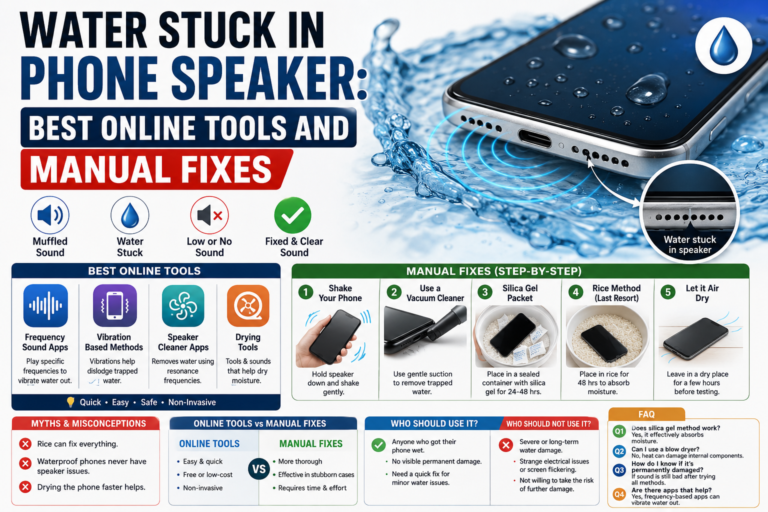
Give the phone at least 20–30 minutes sitting speaker-down on a dry towel in a well-ventilated area. This allows a portion of the surface moisture to drain and evaporate naturally before you introduce any vibration-based method.
Restoring Sound: How to Clear Trapped Water and Residue
Once the phone has had some initial rest time and you are confident it is safe to turn back on, this is where you can start actively working on the speaker itself.
Step 1: Power the Phone Back On
If it powers on normally and does not feel unusually warm, you are clear to move to the next steps.
Step 2: Remove the Case
Cases — especially snug or waterproof ones — trap moisture against the speaker grille rather than letting it clear. Take it off completely for the cleaning process.
Step 3: Use a Low-Frequency Water Removal Sound
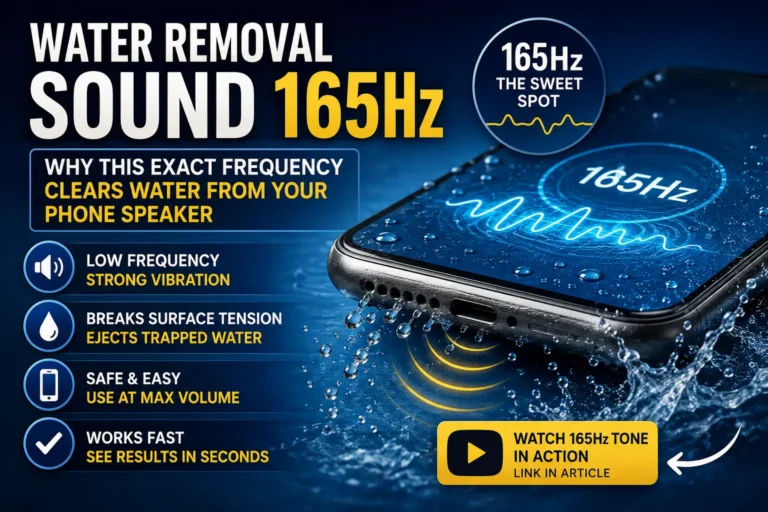
This is the most effective non-invasive method for trapped pool water. A calibrated low-frequency tone, commonly cited around 165 Hz, vibrates the speaker diaphragm strongly enough to physically dislodge droplets and push them out through the grille.
To run this properly:
- Set your volume to maximum.
- Tilt the phone so the speaker faces downward, ideally over a paper towel or soft cloth.
- Play the tone for 30–60 seconds.
- Check for visible droplets on the towel afterward — this is a good sign the vibration is working.
Step 4: Repeat as Needed
Pool water exposure often benefits from two or three cycles rather than just one, especially if the phone was submerged for more than a few seconds. Test with real audio — a voice memo playback or a short call — between cycles to track improvement.
Step 5: Check for Residue After Drying
Once the phone sounds mostly clear, shine a flashlight at an angle across the speaker grille and look for a chalky or crusty film, which can indicate leftover mineral residue from the pool water. If you see this, a soft, dry, clean brush gently swept in one direction can help lift it away — never use anything sharp or apply pressure.
Watch the Full Process in Action
Here is a demonstration covering water removal from a phone speaker using the sound-based method described above:
📺 Video: Get Water Out of Speaker Sound
https://www.youtube.com/watch?v=U6-POQv1ig0
How Much Time Do You Actually Have?
This is the part that genuinely differs between pool water and a plain splash. As a rough guide:
- Within the first few hours, freshwater exposure (a splash, rain, or sink dunk) typically causes minimal lasting damage if you act promptly.
- With pool or salt water specifically, the more aggressive chemical and mineral content means oxidation can begin noticeably sooner — often within the first 24 hours rather than several days.
- Beyond roughly 48–72 hours of unresolved exposure, especially with salt or chlorine involved, the odds of some permanent corrosion affecting sound quality rise substantially, and drying alone will not reverse it at that point.
This is exactly why the fresh-water rinse and prompt drying steps matter more for a pool incident than people often expect — the usual “just let it sit in rice for a couple of days” advice loses a lot of its usefulness when chlorine and salt are involved, since delay works against you faster than with plain water.
Acting quickly matters more with pool water than with a plain splash, since chlorine and salt accelerate corrosion.
What to Avoid After a Pool Dunk
A few common instincts actually make pool water damage worse rather than better:
- Do not rely on rice. It is slow even for plain water, and it does nothing to address the chlorine or salt residue that is the real long-term threat after a pool exposure.
- Do not use a hair dryer or other heat source. Heat can cause any remaining salt or mineral content to bake onto internal components rather than simply drying away, and it risks warping delicate parts.
- Do not skip the initial fresh-water rinse if pool or salt water was involved. It feels counterintuitive to add more water, but a brief rinse specifically targets the chemical residue that plain drying cannot address.
- Do not repeatedly test the speaker every few minutes. Occasional checks are fine, but excessive powering on and off adds unnecessary electrical stress while the phone may still have some residual moisture — space out your tests.
When to See a Professional Instead
Most pool-related speaker issues resolve with prompt rinsing, drying, and a few sound-based cleaning cycles. A few signs suggest it is time to stop the DIY approach:
- The phone was fully submerged for more than a minute or two rather than a quick dunk.
- Sound quality is not improving at all after 24 hours of proper drying and cleaning attempts.
- You notice unusual warmth, a swollen battery, or the phone behaving erratically in ways unrelated to sound.
- Crackling comes and goes unpredictably rather than steadily improving, which can point to early corrosion rather than simple trapped moisture.
A technician can inspect and clean internal contacts more thoroughly than any sound-based method alone, which matters more with pool water given the added chemical risk.
Preventing This Next Time
A little bit of habit change goes a long way for anyone who spends regular time around pools:
- Use a dedicated waterproof pouch or case any time the phone is near the water, rather than trusting a splash-resistant rating alone.
- Keep the phone away from the pool’s edge on a towel or bag rather than directly on a lounge chair where it can slide in.
- Run a quick sound-based cleaning cycle after any pool day, even if nothing seems obviously wrong, since fine chlorine mist and splashes can affect the speaker without a full dunk ever happening.
- Consider a waterproof phone specifically rated for pool or beach use if this is a frequent risk in your routine.
Frequently Asked Questions
Is pool water more dangerous to my phone speaker than rainwater?
Yes, generally. Chlorine and dissolved minerals in pool water are more aggressive toward metal contacts than plain rainwater, which shortens the safe window before corrosion becomes a concern.
Should I really rinse my phone with more water after it fell in a pool?
For chlorinated or salt water specifically, a brief, gentle rinse with plain fresh water can help dilute and remove chemical residue before it dries and crystallizes. It is a reasonable step specifically for pool or ocean exposure, not for a simple rain splash.
How long can my phone sit in a pool before real damage happens?
A quick, brief dunk followed by prompt drying usually causes minimal lasting damage. Extended submersion of more than a minute or two significantly raises the risk of internal corrosion, especially with chlorinated or salt water.
Can a sound-based cleaner remove chlorine residue, or just water?
It is most effective at removing standing water and loosening light residue through vibration, but crusty mineral buildup left after drying may need a gentle brush cleaning in addition to the sound cycle.
Will my phone’s water resistance rating protect it in a pool?
Most consumer water resistance ratings are tested with fresh water under controlled conditions, not chlorinated pool water or prolonged submersion. Treat any pool exposure seriously even on a “water-resistant” phone.
How soon can I use my phone normally after a pool dunk?
If sound quality steadily improves through drying and a few cleaning cycles, most people are back to normal within a few hours to a day. If it is not improving at all after 24 hours, that is the point to consider professional help instead of continued DIY attempts.
Final Thoughts
A phone dunked in a swimming pool feels like a worse-case scenario than a plain splash, and in some real ways it is — the chlorine and mineral content in pool water do make speed and the right sequence of steps matter more than they would for an everyday rain shower. But the core fix is still the same: get the phone out and powered off quickly, rinse away chemical residue if pool or salt water was involved, dry it properly, and use a low-frequency sound cycle to push out whatever moisture remains.
Handled promptly, most pool-related muffled speakers clear up within hours, not days — no rice, no hair dryer, and no need to panic your way into a repair shop visit before you have even tried the basics.
Had your phone take a dip in the pool? Share what worked to get your speaker sounding normal again in the comments, and pass this along to anyone heading poolside this summer.